(800) 210-7017
The spin is the actual product. Two clinicians running two different kits on the same patient can pull final samples that look almost nothing alike under a hemocytometer, and the reason is sitting in the centrifuge protocol, not the marketing brochure. If you don’t understand the separation physics, you’re outsourcing the quality of every injection you do to a vendor who didn’t draw the blood.
Single-spin kits typically deliver 2 to 4 times baseline platelet concentration in 5 to 10 minutes, while double-spin protocols push 5 to 9 times baseline through a soft separation spin followed by a hard pellet spin.
The choice between single and double-spin isn’t a quality ladder. It’s a tradeoff between dose and operational simplicity, and you need to know exactly what you’re trading before you pick a kit. One physical separation event versus two changes everything downstream: concentration, sterility risk, chair time, and how much your output depends on the person holding the syringe.
| Criteria | Single-Spin | Double-Spin |
|---|---|---|
| Spin Events | One pass, 5 to 10 minutes | Two passes, 18 to 25 minutes total |
| Concentration Factor | 2 to 4 times baseline | 5 to 9 times baseline |
| Red Cell Carryover | Higher unless buoy or gel is used | Notably lower, often under 1 percent |
| Operator Variability | Lower, more reproducible | Higher, two transfers add handling risk |
| Sterility Exposure | One closed system | Two open transfers between tubes |
Single-spin protocols cap out around 2 to 4 times baseline concentration in one closed step, while double-spin protocols reach 5 to 9 times baseline through two separation events that add handling, transfer steps, and operator-dependent variability.
The numbers cluster within recognizable bands but they’re not interchangeable, and the most common source of off-label PRP in clinical practice is substituting an unvalidated centrifuge. RPM on the dial isn’t the same as g-force on the sample, and if you don’t run the conversion you can be off by enough to wreck your product without ever seeing why.
Substituting an unvalidated centrifuge is the most common source of off-label PRP output in clinical practice because relative centrifugal force depends on rotor radius, not RPM alone.
Concentration factor is the most quoted performance number in PRP marketing, and it’s also the most misunderstood. Higher isn’t categorically better. Several studies show a plateau around 5 to 7 times baseline for many target tissues, and very high concentrations may actually inhibit cell proliferation through growth factor feedback. The math is simple but the inputs have to be honest.
Concentration factor above 8 to 10 times baseline may actually inhibit cell proliferation through excessive growth factor signaling that triggers feedback inhibition, so higher is not categorically better.
Yield is the silent killer of PRP quality. Two products with identical concentration factors can deliver completely different absolute doses if one started with a smaller volume or lost more platelets to the discard layer. A product that looks fine on a platelet count can still under-dose your patient because most of the platelet mass got thrown away with the platelet-poor plasma.
Single-spin chairside kits typically recover 40 to 70 percent of starting platelets while double-spin protocols reach 70 to 90 percent yield, meaning identical concentration factors can deliver substantially different absolute platelet doses.
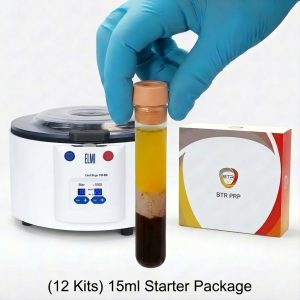
After the spin, every cell type stratifies at its own density level. Where you draw from, and how aggressively you pull through the buffy coat, determines exactly what ends up in the syringe. The clinical stakes are real: leukocyte content can be the difference between helping a chronic tendinopathy and worsening a knee osteoarthritis joint.
Leukocyte-rich PRP is preferred for chronic tendinopathies where inflammatory signaling helps healing, while leukocyte-poor PRP is preferred for intra-articular knee osteoarthritis injections where neutrophil-derived proteases may worsen cartilage outcomes.
The silent failure mode of poorly centrifuged PRP is a product that still passes a platelet count but has already spent its biological payload in the tube. If your growth factors release during processing instead of at the injection site, you’re injecting empty cells. This is what aggressive spins, abrupt deceleration, and sloppy buffy-coat draws actually cost you.
Mechanical platelet activation begins at shear stress above roughly 100 dynes per square centimeter, which can occur above 2,500 g or during abrupt acceleration and deceleration cycles, releasing growth factors into the supernatant before they reach the target tissue.
Rotor geometry decides how sharply your buffy coat boundary forms and how reproducibly you can draw across it. The wrong rotor turns a clean separation into a smeared, operator-dependent guess, which is why nearly every commercial PRP kit ships with or specifies a swinging-bucket centrifuge and not the fixed-angle units sitting in most general clinical labs.
| Criteria | Swinging-Bucket | Fixed-Angle |
|---|---|---|
| Tube Position | Pivots to horizontal at speed | Held at 30 to 45 degree slant |
| Layer Geometry | Flat, horizontal, parallel to cap | Slanted, oval-shaped, smeared boundary |
| Buffy Coat Sharpness | Sharp, predictable, easy to identify | Angled, can shift during deceleration |
| Operator Dependence | Lower, reproducible draws | Higher, boundary less predictable |
| PRP Kit Adoption | Nearly all commercial kits | Rare for PRP, common for other lab work |
Nearly all commercial PRP kits specify or ship with swinging-bucket centrifuges because their horizontal layering produces a sharper buffy coat boundary than the angled, smeared layers a fixed-angle rotor creates.
There is no universal gold-standard PRP protocol, and the 510(k) clearance on the device you bought says nothing about the therapeutic quality of the product it makes. Manufacturer-claimed performance and in-clinic real-world performance often diverge by 20 to 30 percent, which means the only validation that actually protects your patients is the one you run yourself.
Manufacturer-claimed PRP performance and in-clinic real-world performance often diverge by 20 to 30 percent, so the only reliable validation is in-house testing of concentration factor and yield across at least 5 to 10 patients.