(800) 210-7017
Most people shopping for a kit fixate on one number, but quality is a chain, and your weakest link sets the dose your patient actually gets. The way the kit separates blood, the chemistry that keeps platelets dormant, the centrifuge driving it, and the hands running it all stack together, so a great spec sheet means little if any one of them slips.
Technical VerdictA high-quality PRP kit pairs a validated concentration factor, a clean separation mechanism, compatible anticoagulation, controllable leukocyte content, and a sterile reproducible workflow that holds up in real clinical hands.
This single choice drives most of the spread you’ll see in PRP potency, so it’s worth understanding before you buy. Single-spin is faster and harder to mess up, but double-spin is where the dense, high-yield preparations come from, and that extra step asks more of your technique and your chair time.
| Criteria | Single-Spin | Double-Spin |
|---|---|---|
| Concentration factor | 2-3x baseline | 4-7x baseline |
| Spins | One | Two |
| Platelet loss risk | Lower | Higher per transfer |
| Chair time | Shorter | Longer |
The Bottom LineSingle-spin protocols reach about 2-3x baseline while double-spin protocols commonly hit 4-7x baseline, but the goal for hair is a controlled high yield, not the maximum number, since concentrations that climb too high can blunt follicular response.
The anticoagulant is the quiet chemistry that keeps your platelets alive and dormant between the draw and the injection, and getting it wrong degrades a preparation that looks perfectly fine on the bench. Pick the wrong agent and your platelets activate during the spin, dumping their growth factors into plasma you throw away, so the patient gets a rich count on paper that’s hollow where it counts.
Expert NoteAcid citrate dextrose and sodium citrate halt clotting by reversibly binding calcium without damaging platelets, while EDTA’s more aggressive chelation causes membrane changes that make it the wrong choice for functional therapeutic PRP.
Concentration factor is simply the ratio of your final PRP count to the patient’s baseline, so a patient starting at 250,000 platelets per microliter who finishes at 1,000,000 has a factor of four. Here’s the trap most people fall into: that ratio says nothing about absolute dose, and a high factor in a tiny volume can deliver fewer total platelets than a modest factor in a larger one.
Critical InsightFor hair restoration the reliable therapeutic window runs roughly 3-6x baseline, often around 1,000,000 to 1,500,000 platelets per microliter, and pushing far above that can suppress results because supraphysiologic growth factor levels downregulate the receptors they’re meant to stimulate.
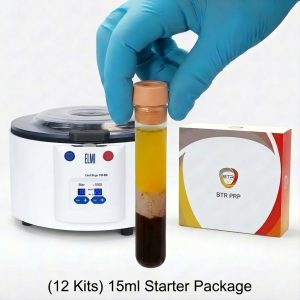
The separation hardware is what turns a centrifuged tube of stratified blood into a cleanly recoverable layer, and its design largely decides how pure your draw is. Think of these mechanisms on a ladder from most hands-off to most operator-dependent, because where a kit sits on that ladder tells you how much variability rides on the person running it.
Pro TipA well-designed gel or buoy separator sharply cuts red blood cell contamination versus a plain tube, and its real payoff is reproducibility, since it removes much of the human variability and delivers consistent purity across operators and patients.
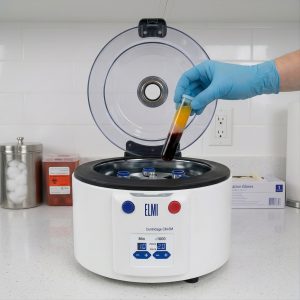
A kit is only as good as the centrifuge driving it, and the same disposable run on two different machines can hand you two different products. The number that actually matters is relative centrifugal force, not RPM, because the same RPM on a small rotor and a large one delivers very different g-forces, which is how a protocol that’s right on one machine goes wrong on another.
Technical NoteBecause the manufacturer’s concentration claims assume a specific force, time, and rotor, a kit should be paired with the centrifuge and protocol it was validated against rather than dropped into a generic device with guessed settings.
Leukocyte content is a deliberate design choice, not an accident, and for scalp work the preference tilts toward leukocyte-poor preparations. The reason is simple once you see it: neutrophils drive an aggressive inflammatory response that helps in some tissues but tends to work against the gentle proliferative signaling that delicate follicles respond to.
| Criteria | Leukocyte-Poor | Leukocyte-Rich |
|---|---|---|
| White cells | Few, left behind | Buffy coat captured |
| Inflammatory signal | Lower | Higher |
| Hair restoration fit | Preferred | Generally avoided |
| Stronger elsewhere | — | Some musculoskeletal uses |
Key TakeawayFor androgenetic alopecia a meaningful body of practice favors leukocyte-poor PRP to minimize inflammatory burden while preserving growth factor delivery, whereas leukocyte-rich PRP has stronger support in some musculoskeletal and tendon applications.
Here’s a hard truth no kit can engineer around: it can’t manufacture platelets the patient didn’t supply, so draw volume and patient hematology set real ceilings on every treatment. A 20-milliliter system finishes with far less injectable concentrate than a 60-milliliter one, and a patient at the low end of normal platelet count produces a leaner dose than a high-count patient from the exact same protocol.
Authority WarningBaseline platelet count, hematocrit, and draw volume set hard ceilings on the absolute dose a kit can deliver, so a clinic must work backward from the treatment area and start with enough blood to finish with a meaningful injectable amount.
When the product goes into your patient’s scalp, reliability is as much about safety and provenance as it is about platelet numbers. A kit that exposes blood to open air between steps is handing bacteria an entry point, so the structural design and the paperwork behind a device tell you whether you can trust it.
Safety NoteA closed-system design with single-use sterile disposables sharply reduces airborne and contact contamination, and pairing that with verified regulatory clearance and lot traceability separates a trustworthy kit from a questionable one.
The count printed on the spec sheet is a best case, and the dose that actually reaches your patient depends heavily on the hands running the process. The same kit in a careful experienced hand delivers noticeably more functional platelets than in a hurried one, which makes operator skill one of the largest sources of patient-to-patient variability you’ll ever see.
Expert SummaryOperator technique is one of the largest sources of patient-to-patient variability, and the remedy is standardization through written protocols, consistent technique, hands-on training, and periodic verification of delivered counts.