(800) 210-7017
Think of a PRP kit as the toolbox that turns one routine arm stick into a repeatable scalp treatment. It’s a sterile, single-use set of consumables and a spin protocol that lets your clinician pull the platelets out of your own blood and put that concentrate exactly where thinning hair needs it. The whole point is that the growth signals your follicles respond to are riding in the platelet fraction, and this kit is what isolates them cleanly enough to inject.
A PRP kit concentrates a patient’s own platelets three to seven times baseline and delivers that growth-factor-rich plasma to the scalp at the level of the dermal papilla.
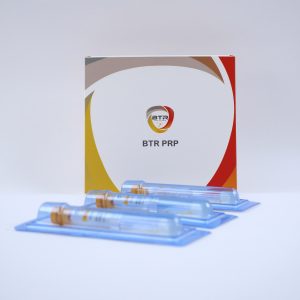
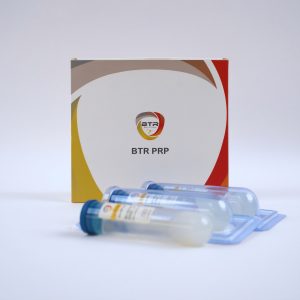
Everything in the package exists to serve one part: the separation tube. That tube is a thick-walled, vacuum-sealed vessel built to take the g-forces of a spin, usually pre-charged with anticoagulant and often holding a separator gel that parks the red cells below a barrier so your platelet layer stays reachable. Once you know the tube is the engine, the rest of the kit makes sense as the supply chain that gets blood in and concentrate back out.
Nearly every blood-contacting item in a PRP kit is single-use and patient-specific because the product is autologous, leaving only the centrifuge as shared equipment.
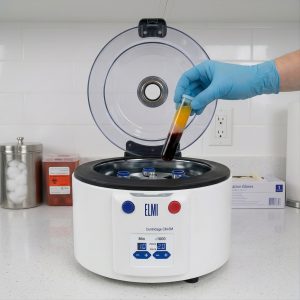
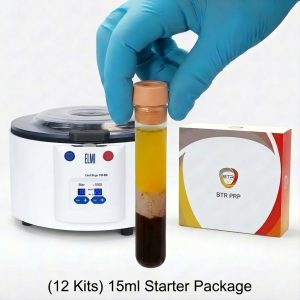
Centrifugation is just gravity turned up loud. Spin the tube and the components of your blood, which all sit at slightly different densities, sort themselves into clean horizontal bands. Get the force and timing right and you pull a tidy platelet harvest; get it wrong in either direction and you either drag red cells into the product or rupture the very platelets you’re after.
Red cells settle at about 1.09 g/mL and plasma at about 1.03 g/mL, and that density gap is the entire reason a controlled spin can band the platelet fraction out cleanly.
The whole regenerative payload is stored inside the platelets, in tiny sacs called alpha granules. When those platelets hit collagen in your scalp tissue or an added activator, they degranulate and flood the area with growth factors that act on the signaling hub at the base of each follicle. Here’s the catch most people miss: this is a temporary signaling boost, not a permanent fix, which is exactly why protocols call for repeat sessions.
PRP works by prolonging the anagen growth phase and shortening telogen, so miniaturized but living follicles respond far better than follicles that have already scarred over and died.
Drawn blood starts clotting within minutes, and a clot would trap the exact platelets you’re trying to harvest. So the anticoagulant exists for one job: keep the blood liquid through the draw and the spin so your platelets stay suspended and recoverable. The agent you pick isn’t a small detail either, because it sets the pH and decides how healthy those platelets are when they finally release their growth factors.
Stray from the roughly 1:9 anticoagulant-to-blood ratio and you either under-anticoagulate and risk micro-clots, or over-dilute and drop the final platelet concentration.
The biggest dividing line between kits is how many spins they run, and that single choice cascades into yield, handling time, and how many patients a clinic can see in a day. A single-spin kit is fast and simple but modest in concentration; a double-spin kit takes more work but pushes the platelet count much higher. For scalp work, where a clean and concentrated product matters, that tradeoff is worth thinking through before you commit a centrifuge and a clinician’s hour to each case.
| Criteria | Single-Spin | Double-Spin |
|---|---|---|
| Steps | One centrifugation, gel separator | Soft spin, transfer, then hard spin |
| Platelet yield | About 2 to 3x baseline | About 5 to 7x baseline or higher |
| Speed and handling | Fast, simple, reproducible | Labor-intensive, longer per case |
| Best fit | High-volume, routine prep | Clean, concentrated hair work |
A double-spin, leukocyte-poor system delivers the cleaner, more concentrated, low-inflammation product preferred for the scalp, but it ties up a clinician and centrifuge longer and changes the per-treatment economics.
Concentration is always measured as a fold-increase over your own baseline, so the math starts with knowing your normal platelet count. A preparation at 900,000 platelets per microliter against a baseline of 300,000 is a threefold increase, plain and simple. The surprise for most people is that higher isn’t automatically better, because the dose-response curve plateaus and can even reverse when you push concentration too far.
The practical therapeutic target for hair restoration lands around 1,000,000 platelets per microliter, and pushing past the three-to-six-times window risks down-regulating the very receptors the growth factors act on.
A clinical-grade kit is defined as much by what it keeps out as by what it produces, and the dividing feature is a closed processing pathway. Don’t assume that because PRP is made from your own blood the sterility part is optional. Environmental bacteria introduced while the plasma is being processed can still ride the needle into your scalp and cause folliculitis, an abscess, or a deeper infection.
A cleared, labeled PRP device validated by gamma irradiation or ethylene oxide gives a clinic a defensible standard of care, while improvising with generic lab tubes falls outside intended use.
The whole thing is a tightly sequenced chairside procedure that usually wraps in under an hour, and most of that time is the spin and the methodical injection, not the busy work. Knowing the order helps you see why each step matters, from confirming you’re a good candidate to the aftercare that protects the result you just paid for.
Start to finish, the chairside PRP process commonly runs 30 to 60 minutes, with a typical course of three to four monthly treatments followed by periodic maintenance.
PRP, PRF, and concentrated growth factors all come from your own blood, but they split apart on one decision: whether an anticoagulant is in the tube. That single choice decides whether you end up with a free-flowing liquid you can inject across broad thinning areas or a soft fibrin clot that releases its signal slowly over days. The underlying biology is nearly the same; the form is what actually separates them.
| Criteria | PRP | PRF | Concentrated Growth Factors |
|---|---|---|---|
| Anticoagulant | Required | None | None |
| Final form | Liquid injectable | Soft fibrin clot or membrane | Dense, growth-factor-laden fibrin |
| Release pattern | Quick burst | Slow elution over days | Sustained, high-concentration |
| Best hair use | Broad scalp injection | Slower, longer-lasting stimulus | Combination and graft handling |
The presence or absence of an anticoagulant, and the resulting liquid-versus-matrix form, is what most separates PRP from PRF and concentrated growth factors, not the underlying biology.