(800) 210-7017
If you run an orthopedic or pain management practice and you’re thinking about adding PRP, the kit itself is the small box that does most of the heavy lifting. It’s a single-use, FDA-cleared Class II device that lets you draw a patient’s blood, spin it down, and inject the platelet-rich plasma in one closed sterile workflow, and the kit you pick quietly sets your platelet concentration, your leukocyte profile, your delivered volume, and your per-procedure margin.
A PRP kit is an FDA-cleared Class II single-use device that prepares autologous platelet-rich plasma at the point of care, with wholesale kit costs typically running between roughly $150 and $600 and patient-pay prices commonly between $500 and $1,500 per injection.
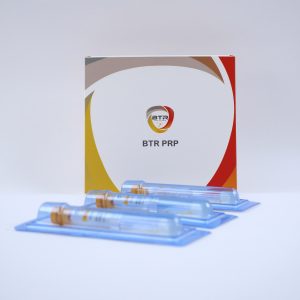
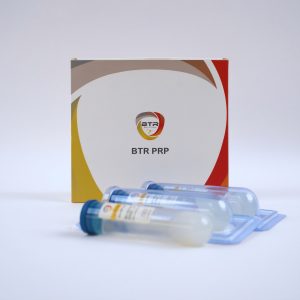
You’re not buying a tube. You’re buying a sterile system where each part is engineered to keep the workflow closed from vein to injection, and every piece carries clinical weight. Knowing what’s in the box and why it’s there is how you tell a serious kit from a glorified blood-collection tube.
Every PRP kit is supplied sterile with a documented expiration date as part of its FDA clearance, and that sterility chain must be respected at the practice level.
PRP earns its keep in chronic, degenerative, and tendinopathic pain, not acute inflammation. The strongest evidence clusters around a handful of indications, and that’s where you should anchor your service line before chasing the longer tail.
Knee osteoarthritis, lateral epicondylitis, and plantar fasciitis have the strongest evidence base for PRP in orthopedic and pain management, with other tendinopathies and axial spine sources still maturing in the literature.
Most practices get the kit’s clearance wrong on day one and only find out when a state board or a plaintiff’s attorney asks the awkward question. The good news is the rules are clear once you separate the device from the procedure, and your documentation does most of the protective work.
PRP kits are FDA-cleared as Class II devices through the 510(k) pathway with narrow labeling, which means most orthopedic and pain management clinical uses of the resulting PRP are technically off-label but remain legal under the physician practice of medicine.
The kit’s marketing sheet will hand you one number; the patient’s outcome depends on five. Once you understand which specs actually move the clinical needle, you can read a vendor spec sheet and a bench comparison study with the same skeptical eye.
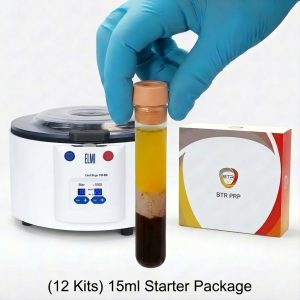
Clinically meaningful PRP typically requires a platelet concentration factor of approximately three-fold to six-fold over baseline, with leukocyte content and residual red blood cell load tuned to the specific clinical indication.
The centrifuge is where most practices either save money for years or create a bottleneck they can’t undo. It’s matched to the kit, not chosen independently, and the cheapest path is usually the one that fits your kit shortlist before you sign anything.
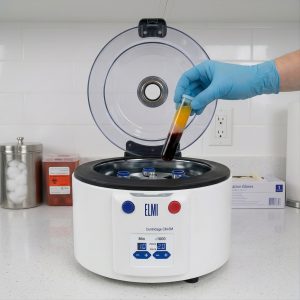
Clinical PRP centrifuges typically cost between roughly two thousand and seven thousand dollars and must support the RCF range and rotor geometry validated by the kit manufacturer.
Per-procedure cost is where most practices either build a real margin or quietly lose money on labor they never priced. The kit price is the headline; the fully-loaded cost is the number you should actually run your pro forma on.
| Cost Lever | PRP | Corticosteroid | Hyaluronic Acid |
|---|---|---|---|
| Kit or drug | ~$150-$600 | Under $50 | ~$100-$400 |
| Amortized capital | A few dollars per case | Negligible | Negligible |
| Clinical time (30-60 min) | Higher | Lower | Moderate |
| Fully loaded total | ~$250-$800 | Under $50 | Comparable to PRP |
Fully-loaded per-procedure cost for PRP in most orthopedic and pain management practices lands between roughly two hundred fifty and eight hundred dollars once the kit, supplies, allocated labor, and overhead are honestly counted.
PRP is cash-pay because Medicare and most commercial carriers still call it investigational, so your revenue model lives or dies on patient education, pricing discipline, and case volume. Treat it like a real service line, not a feature on your website, and the payback math gets friendly fast.
Per-procedure margin commonly runs between two hundred and twelve hundred dollars and payback on initial equipment, training, and marketing investment is typically achieved within three to twelve months for practices that hit reasonable volume.
PRP is one of the safer injection procedures in the regenerative toolbox because the active agent is the patient’s own blood, but safer is not safe by default. Screening, sterile workflow, and honest consent are what keep the complication curve flat.
Infection is the most feared local complication of PRP and remains rare with proper sterile technique and a closed-kit workflow, with reported rates below one percent in well-conducted series.
The kit doesn’t make the program; the team and the protocol do. Layered training across phlebotomy, centrifuge operation, and ultrasound-guided injection is the difference between a service that’s reliable from day one and one that’s still finding its feet a year in.
A complete PRP program needs documented training across phlebotomy, centrifuge operation, and ideally ultrasound-guided injection, plus a written clinical protocol and an informed consent that explicitly covers the off-label nature of the procedure.
Kit comparison is where most buying decisions go sideways, because the dimensions that matter clinically aren’t always the ones the sales rep leads with. Pick on output specs and total cost of ownership, not headline kit price, and the field narrows quickly.
| Dimension | What to Demand | Common Red Flag |
|---|---|---|
| Cellular output | Independent bench data on platelet concentration, capture, leukocyte profile, RBC, and final volume | Concentration cited in a sub-volume, not the whole product |
| Workflow ergonomics | Total minutes, transfer steps, single-spin vs double-spin, operator forgiveness | “Easy” claims with no time study to back them up |
| Centrifuge compatibility | Validated on multiple centrifuges, with the option to keep your existing unit | Proprietary centrifuge that locks you to one vendor for life |
| Pricing and clearance | Transparent volume tiers and a real 510(k) clearance letter | Opaque pricing that depends on what you’ll pay |
| Training and support | Clinical training, marketing materials, warranty, and responsive service | Clinical claims that exceed the cleared labeling |
Define your practice’s primary indications first to set leukocyte-rich versus leukocyte-poor and required volume, then narrow to kits whose independently characterized output specifications match that need, and only then negotiate on price and support.