(800) 210-7017
Think of a PRP kit as a single-use, sealed factory in a box: every piece exists so you can pull whole blood, spin out a concentrated platelet fraction, and put it back into the patient without ever breaking sterility. If you can name what each component does and why it’s in the bundle, you can troubleshoot a bad yield, defend your protocol to a state board, and price-shop kits intelligently instead of guessing.
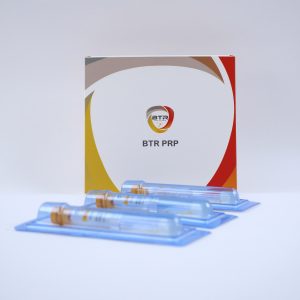
A PRP kit is a sterile single-use bundle of FDA-cleared Class II disposables that draws whole blood, separates it into a concentrated platelet fraction by centrifugation, and delivers that concentrate back to the patient at the treatment site within a validated, minimally manipulated protocol under 21 CFR 1271.
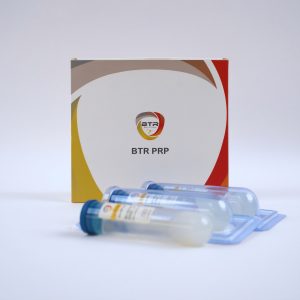
The processing tube is the heart of the kit, and everything else in the box is built around filling it, spinning it, or emptying it cleanly. Most are medical-grade polypropylene or PET because those plastics hold their shape under centrifugation g-forces and don’t leach into the plasma, and they come in two distinct mechanical families you should be able to recognize on sight.
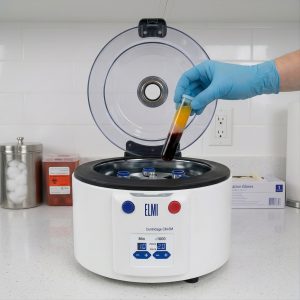
A real PRP tube is validated as a sealed sterile pathway and is paired to a specific centrifuge configuration, usually a fixed-angle rotor at a defined RCF and time, because deviating from that pairing changes the layering and platelet yield in unpredictable ways.
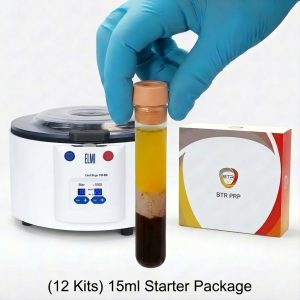
The separator is the silent workhorse that makes the whole spin meaningful. In gel-based tubes it’s a thixotropic polyester or polyacrylate formulated to a density that sits exactly between red cells and plasma, so under spin it flows, finds its target layer, and locks back into a stable barrier the moment the rotor stops.
A separator gel calibrated to a density of roughly 1.04 to 1.06 grams per milliliter forms a stable post-spin barrier between red cells and plasma, and even a half-tenth deviation in density traps the platelet-rich buffy coat below the barrier or lets red cell debris contaminate the harvest.
Whole blood starts clotting within seconds of leaving the vein, and a clotted sample is useless for PRP because the platelets are already trapped in fibrin and can’t be concentrated. The anticoagulant’s job is to pause that cascade just long enough to finish the spin and the transfer, then step out of the way so normal clotting resumes at the injection site.
| Agent | Mechanism | Use in PRP |
|---|---|---|
| ACD-A (1:9) | Chelates ionized calcium, dextrose preserves platelet viability | Dominant choice, usually pre-loaded in tube |
| Sodium citrate (1:9) | Chelates calcium, no dextrose buffer | Acceptable but platelets degrade faster |
| EDTA | Chelates calcium aggressively, damages platelet membranes | Never used, permanently impairs degranulation |
| Heparin | Activates platelets prematurely | Never used, growth factors release in tube |
Acid citrate dextrose solution A at a 1-to-9 ratio with whole blood is the dominant PRP anticoagulant because it chelates ionized calcium to halt clotting while the included dextrose preserves platelet viability, and most modern kits pre-load the exact validated dose so the operator only fills to a marked line.
Every accessory in the bundle exists to do one thing: move blood from vein to processing tube without shearing the platelets or breaking sterility. Pick the wrong gauge or skip the closed pathway and you’ve degraded the product before the centrifuge even starts.
A 21-gauge butterfly set is the standard PRP draw device because narrower 23-gauge or smaller lumens impose enough shear stress to pre-activate a meaningful fraction of platelets, causing them to degranulate inside the tube rather than at the injection site and lowering the therapeutic potency of the final concentrate.
Transfer hardware is what stands between a clean PRP dose and a contaminated one, and it’s what decides whether the patient gets the full concentrate the spin actually produced. The closed-system principle holds from the centrifuge to the needle: plasma shouldn’t see room air on its way to the injection site.
Closed-system transfer from centrifuge tube to final injection syringe is non-negotiable because air exposure introduces two problems at once, airborne contamination risk and platelet activation at the air-liquid interface, both of which compromise the therapeutic product before it reaches the patient.
An activator is the optional accelerant that flips dormant platelets into actively degranulating ones on a timeline the clinician picks, instead of waiting for tissue contact to do the job. In modern orthopedic and pain management workflows it’s used in narrow situations and skipped in most others, so it pays to know exactly which scenario you’re in before you reach for the ampule.
Most orthopedic and pain management practices skip pre-injection activation entirely for liquid intra-articular and peritendinous PRP and reserve calcium chloride activation only for cases where a structured fibrin gel matrix is the actual point of the intervention, such as topical application to a surgical wound bed or use as a tissue scaffold.
The single-spin versus double-spin split is one of the most misunderstood distinctions in PRP, and it changes what arrives in the box, how long the workflow takes, and what kind of concentrate you can deliver. Pick the wrong system for your case mix and you’re either overspending on prep time or underdelivering on concentration.
| Criteria | Single-Spin | Double-Spin |
|---|---|---|
| Disposables per dose | One separator tube or proprietary device | Two tubes, often a resuspension vial, more transfer adapters |
| Platelet concentration | 2 to 3x baseline | 4 to 7x baseline |
| Leukocyte profile | Leukocyte-rich PRP (LR-PRP) | Can be configured leukocyte-poor (LP-PRP) |
| Total processing time | 8 to 12 minutes | 15 to 25 minutes |
| Typical clinical fit | Pain management facet, SI, epidural work | Orthopedic tendinopathy, knee arthritis |
Double-spin systems achieve 4 to 7 times baseline platelet concentration and allow the operator to selectively exclude leukocytes for LP-PRP, while single-spin systems deliver 2 to 3 times baseline as leukocyte-rich PRP in 8 to 12 minutes versus 15 to 25 for the double-spin workflow.
Regulatory status is the part of the kit conversation most practices skim past, and it’s the part with the largest liability and reimbursement consequences if it goes wrong. Get the paperwork story straight and you’ve protected your charting, your billing, and your relationship with any future state board inquiry.
Every disposable in a properly marketed PRP kit holds an FDA 510(k) clearance as a Class II medical device for the preparation of autologous platelet-rich plasma at the point of care, and the resulting PRP must be used under the same-surgical-procedure exception of 21 CFR 1271 with documented lot number, manufacturer, and protocol to keep the practice inside the minimally manipulated, in-office scope rather than triggering biologic drug regulation.