(800) 210-7017
When you’re choosing a PRP kit for hair restoration, the label on the box tells you almost nothing. What actually separates one kit from the next is how it pulls platelets out of whole blood, how clean and concentrated that final product is, and whether the workflow fits how your clinic actually runs. Get those three things right and the rest is detail.
The choices that matter most for hair restoration are the concentration factor, whether the system is leukocyte-rich or leukocyte-poor, and whether the workflow fits the clinic’s volume and sterility standards.
The separation method is the one feature that decides what actually ends up in your syringe, so it deserves the bulk of your attention. Gel tubes are fast and forgiving but leave platelets spread thin through a larger plasma volume, while buoy and float systems settle right at the plasma-red cell interface and let you draw the exact platelet-rich band you want.
The separation method is the single technical feature that most defines a PRP kit because it determines what ends up in the syringe.
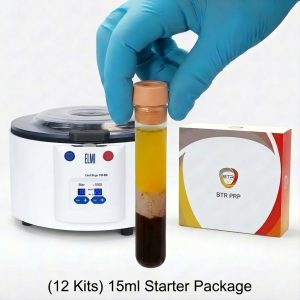
Picture two paths to the same finish line: one keeps the cells gentle and the clock short, the other squeezes out a richer dose at the cost of more handling. A single spin sediments the heavy red cells and leaves platelets suspended in plasma, while a double spin adds a hard second cycle that pellets the platelets so you can resuspend them in a smaller, more concentrated volume.
| Criteria | Single-Spin | Double-Spin |
|---|---|---|
| Spin time | 5 to 8 minutes | Roughly double |
| Concentration factor | 2 to 3 times baseline | 4 to 7 times baseline |
| Handling | Minimal, one cycle | Extra transfer and resuspension |
| Platelet stress | Low | Higher if spun or resuspended too hard |
A single spin reaches two to three times baseline in five to eight minutes, while a double spin pushes concentration to four to seven times at roughly double the processing time.
Here’s what most people overlook: the anticoagulant isn’t just there to stop clotting, it quietly decides how well your platelets survive the trip from arm to scalp. ACD-A carries dextrose and an acidic buffer that protects platelet metabolism while the sample sits and spins, where plain sodium citrate offers a less protective environment that can leave platelets marginally more fragile over longer processing.
The blood-to-anticoagulant ratio is a hard constraint of roughly nine parts blood to one part anticoagulant, because too little lets micro-clots trap platelets and too much over-suppresses the calcium needed for activation.
I don’t want you to learn this lesson the hard way: every time the blood meets room air, you’ve opened a door for contamination, and an open workflow opens that door at every manual transfer. A closed system routes the sample through a sealed, single pathway so it never sits in an open container, which is exactly why clinics with strict standards lean on them despite the cost premium.
| Criteria | Closed System | Open System |
|---|---|---|
| Air exposure | Sealed, single pathway | Open at each manual transfer |
| Repeatability | High, batch to batch | Varies with operator technique |
| Contamination risk | Minimal | Cap removal and pipette tips |
| Cost per treatment | Several dollars more | Lower upfront |
A closed system routes blood through a sealed, single pathway so the sample never sits in an open container, minimizing the chance of airborne or contact contamination compared to open manual transfers.
Concentration factor tells you how many times richer your preparation is than the patient’s own baseline blood, and it’s the number everyone reaches for first. The trap is assuming higher is always better, because evidence points to a working window where pushing past it may not help and could even blunt the cellular response you’re after.
The field increasingly emphasizes total platelet dose, the actual number of platelets injected, rather than fold increase alone, because two patients with the same fold increase can receive very different absolute doses if their baseline counts differ.
This is where clinics get tripped up, so let’s be precise: what gets cleared is the equipment, not the therapy. In the United States, PRP separation devices reach the market through the FDA 510(k) pathway that authorizes the device to produce platelet-rich plasma, but injecting that PRP into the scalp for hair loss remains an off-label use of an otherwise cleared device. That distinction puts the liability squarely on your clinic.
PRP separation devices are cleared through the FDA 510(k) pathway to produce platelet-rich plasma, but injecting PRP into the scalp to treat hair loss is an off-label use that shifts liability onto the treating clinic.
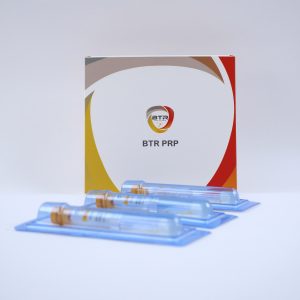
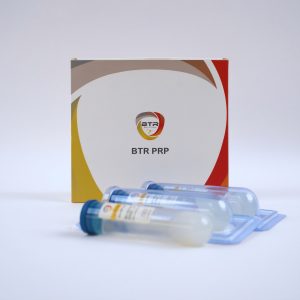
A kit is built around the single-use sterile consumables for one patient, and knowing what’s missing from the box keeps you from getting caught short on treatment day. The centrifuge is the big one it almost never includes, and activation agents like calcium chloride are the frequent surprise, often sold separately when your protocol calls for them.
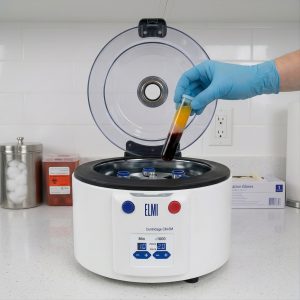
The centrifuge is almost never included in the kit and must match the manufacturer’s validated spin program, so a clinic either buys the manufacturer’s unit or confirms an existing one can run the required settings.
Per-treatment cost runs a wide band, and the spread is driven by the sophistication of the separation technology far more than the raw plastic. The financial trap is reading price as a proxy for quality, because some moderately priced closed systems deliver excellent concentration and sterility while costing far less than premium tiers.
Per-treatment kit cost spans roughly thirty dollars to over one hundred fifty dollars, with the spread driven mostly by separation technology rather than raw materials, so documented yield and sterility matter more than price as a quality signal.