(800) 210-7017
Everything you’ll buy for a PRP hair service sorts into three jobs: drawing the patient’s blood, concentrating the platelets, and putting that plasma back into the scalp. Get those three covered well and the rest is supporting cast. The centrifuge is your one big capital decision, and the single-use kit you open for every patient is the number that quietly decides your margin.
A PRP hair setup rests on three core functions, and its costs split between a one-time capital outlay of several thousand to well over ten thousand dollars and a recurring per-treatment consumable cost that drives the service’s margin.
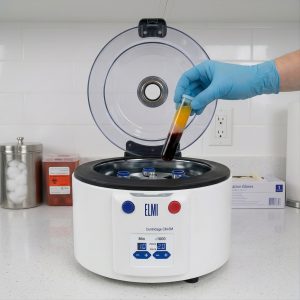
The centrifuge is the heart of the whole setup, because it’s the one device that actually concentrates the platelets, and if its spin is wrong your plasma won’t carry a therapeutic platelet count. You’re aiming for the soft-tissue PRP force window, which lands you on a few thousand RPM, but the smarter question is whether you’ll run a single spin or a double spin, because that decides how much machine you need to buy.
A clinical PRP centrifuge must reach roughly 1,000 to 3,000 g, and a matched centrifuge-and-kit pair is often preferred because the manufacturer has validated the spin program against its own tubes.
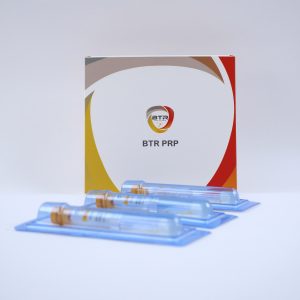
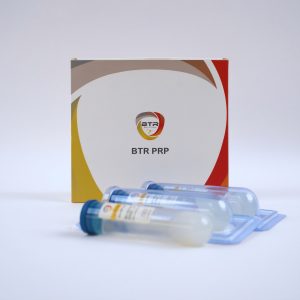
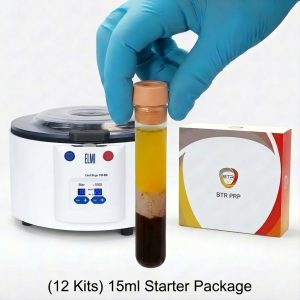
Every session burns a fresh set of single-use supplies, and the star of that set is the separation kit, which packages the special tubes and additives that turn a blood draw into usable plasma. Here’s the part that bites you on price: you buy that kit new for every single patient, so its unit cost is the dominant driver of what each treatment costs you to run.
Closed-system kits keep blood within a sealed sterile pathway from draw to injection and cut contamination risk, while open tube methods cost less per patient but demand more manual transfers under aseptic technique.
Putting the finished plasma into the scalp is its own little toolkit, and these choices shape both how comfortable the patient is and how evenly the product lands. What most people underestimate is the volume of injection points, which is exactly why a lot of clinics reach for a device to keep hundreds of pricks consistent instead of going fully freehand.
| Tool | Manual injection | Device-assisted |
|---|---|---|
| Needle gauge | 27 to 30 gauge, 4 to 13 mm | Preset depth per trigger |
| Syringe size | 1 to 3 mL for precise aliquots | Preset volume per pull |
| Best for | Hands-on control | Repeatable uniformity across many points |
| Alternative path | Direct intradermal injection | Microneedling pen or dermaroller, plasma applied topically |
Scalp delivery uses fine 27 to 30 gauge needles and small 1 to 3 mL syringes, and the choice between careful manual injection and a mesotherapy gun comes down to hands-on control versus the repeatable uniformity a device provides.
A scalp PRP session is minimally invasive, but the sheer number of injection points makes comfort supplies a real part of the kit, and topical numbing cream is the workhorse. Match the comfort plan to the patient in front of you, because a sensitive patient or a large treatment field calls for more than cream alone.
Anesthetics carry total-dose limits to avoid systemic toxicity and have contraindications like known allergy or certain cardiac conditions, so the clinic must track cumulative dosing and screen patients before applying them.
PRP is fundamentally the handling of a patient’s own blood, so infection control isn’t a side concern, it’s the regulatory and clinical baseline that shapes your whole setup. Don’t treat any of this as optional, because an exposure incident or a contamination event is the kind of setback that can shut a service down.
The strongest single lever for cutting the whole infection-control burden is a closed-system kit, which keeps blood within a sealed sterile path from draw to delivery and minimizes the open transfers where contamination is most likely.
The room around the procedure is easy to underrate, but the right furniture and layout are the difference between a smooth session and a cramped, awkward one. Think about your own reach: you’ll be working the crown, hairline, and occipital regions in one sitting, so the patient’s position and your supply layout decide whether the visit flows.
A PRP hair service fits comfortably in a standard treatment room rather than a dedicated lab, since the draw, the spin, and the injection all happen in one visit and the plasma is used fresh.
Your equipment list doesn’t stop at instruments, because PRP is a documented medical procedure whose results unfold over months, and the tools that capture that record are part of running the service responsibly. Standardized scalp photography is the most valuable of these, and consistency is the whole point: same distance, same angle, same light, or your before-and-after images differ only in framing.
Standardized scalp photography with fixed camera distance, angle, lighting, and head positioning lets a clinic compare before-and-after images meaningfully, and all identifiable patient images must be stored under the jurisdiction’s privacy and security rules.
Regulation cuts across every item on the list, because PRP sits where medical devices, blood handling, and scope-of-practice law all meet, and a clinic that ignores it is taking on real liability. The trap most people fall into is assuming a device sold abroad is fine to use locally, so confirm that what you buy actually holds the right authorization for your region.
In many places PRP for hair loss is delivered using cleared devices in an off-label or evolving regulatory context, so practitioners must stay current with national and regional authorities rather than treating the rules as settled.
The money splits cleanly into a one-time capital outlay and a recurring per-treatment cost, and understanding that split is what makes your price defensible and your service profitable. The centrifuge dominates the upfront number, but the single-use kit is what you pay over and over, so watch how a vendor balances those two against each other.
| Cost line | Capital (one-time) | Per-treatment (recurring) |
|---|---|---|
| Centrifuge | A few hundred to well into five figures | Not applicable |
| Separation kit | Not applicable | Tens of dollars open, $100+ closed proprietary |
| Durable extras | Chair, lighting, imaging, mesotherapy gun | Not applicable |
| Small consumables | Not applicable | Phlebotomy, anesthetic, sharps disposal |
Proprietary systems often lower the centrifuge price but lock the clinic into higher per-kit pricing, so a sustainable per-session fee must cover the consumable, a share of capital recovery, staff time, and a healthy margin.