(800) 210-7017
The number you quote yourself for a PRP case isn’t one line item, it’s a small stack you build per patient. Stack the disposable kit, amortized centrifuge, staff time for the draw and spin, anesthetic and injection supplies, and any imaging consumables, and you land on a fully loaded internal cost that swings with kit choice and case volume more than anything else. Get that stack honest up front and you won’t be surprised when you compare it to what you’re actually charging patients.
A fully loaded internal cost per PRP procedure for an orthopedic or pain management practice generally falls in a $150 to $500 range per case, with the great majority of practices clustering in $200 to $350.
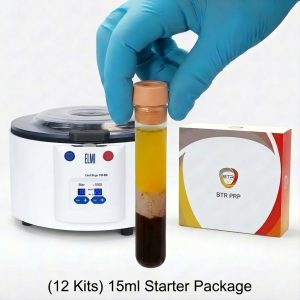
The kit is the biggest single line in your stack, and the price spread is wider than newcomers expect. Where you land in that spread comes down to spin design, draw volume, and how hard you negotiate on yearly volume, and that’s why two practices doing the same procedure can quote dramatically different per-case numbers.
Wholesale per-kit pricing typically lands between $80 and $300, with most US orthopedic and pain management practices paying in the $120 to $220 band before volume contracting cuts another 10 to 30 percent.
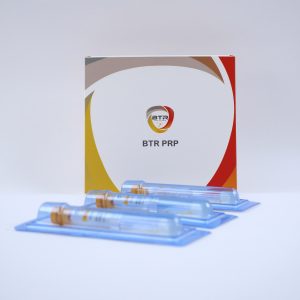
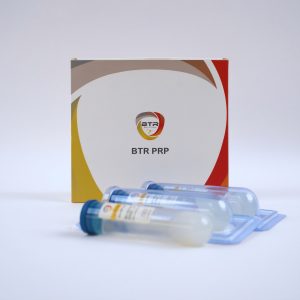
A modern PRP kit is a closed, sterile blood-handling system, and what’s inside the box is more consistent across vendors than the separation device on the front of it. The trap is assuming the kit covers the whole procedure; the draw side is largely handled, but the injection side and the imaging side are your inventory to stock.
| Component | Inside the Kit | Purchased Separately |
|---|---|---|
| Separation device or tube | Yes, always | No |
| Transfer syringes and connectors | Yes | No |
| Venipuncture needle or butterfly | Usually | Sometimes |
| Anticoagulant (ACD-A, sodium citrate) | Usually pre-loaded | Older or low-cost kits only |
| Final injection needle and syringe | No | Yes, physician’s choice |
| Lidocaine, skin prep, sterile drape | No | Yes |
| Ultrasound probe cover and gel | No | Yes, from imaging supply |
| Activator (calcium chloride) | No, rarely | Only for activated PRP cases |
A single-use PRP kit reliably supplies the separation device, transfer syringes, connectors, and anticoagulant, while the practice must stock the injection-side needle and syringe, anesthetic, skin prep, dressings, and any ultrasound consumables from its own inventory.
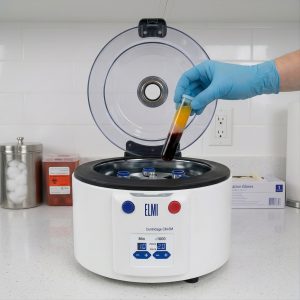
The centrifuge is a one-time hit, not a per-case hit, so the only honest way to load it is straight-line across the cases you’ll actually run on it. The lever that swings this number the hardest is your annual volume, which is why the same machine can cost $10 a case in a busy clinic and $40 a case down the street.
A $5,000 centrifuge amortized across 100 cases per year over a five-year service life lands at $10 per case in equipment depreciation, while the same machine at 25 cases per year lands at $40 per case, which is why a moderately busy practice typically loads $25 to $75 per procedure and an ultra-high-volume center can drive it under $15.
Staff labor is the line everyone undercounts because each step looks short on its own. Add them up and a single PRP case eats 45 to 75 minutes of combined staff time across multiple people, and the loaded hourly rate behind those minutes is what really decides whether your margin holds.
Pure support-staff labor on a PRP procedure typically falls between $30 and $80 per case, with a fully loaded analysis that includes physician opportunity cost adding another $75 to $200 at typical specialist compensation rates.
The supplies outside the kit are pennies and dollars individually, but they’re the line practices most often forget when they price the program. Skip them in your math and you’ll quietly underestimate your true cost by 5 to 10 percent every case, which compounds fast.
Outside consumables including anesthetic, injection supplies, imaging-guidance materials, dressings, and sharps disposal generally aggregate to $10 to $30 per PRP procedure and are responsible for a 5 to 10 percent undercount when omitted from per-case math.
Stack the disposable kit, centrifuge amortization, staff labor, outside consumables, and imaging supplies and you get the only number that matters for honest profitability work. The single biggest reason you’ll land high or low in that range is the kit you picked, since it eats 50 to 70 percent of the whole stack by itself.
After stacking the disposable kit, centrifuge amortization, support-staff labor, outside consumables, and imaging-guidance supplies, the realistic fully loaded internal cost per PRP procedure falls between $150 and $500, with the strong majority of practices clustering in the $200 to $350 band.
Because no commercial payor reimburses PRP for musculoskeletal indications, the patient price is set entirely by what the local market will bear, and it sits well above your internal cost. That gap is the gross margin that makes PRP one of the more attractive cash-pay service lines you can run.
| Procedure Type | Typical Patient Price | Internal Cost | Approx Gross Margin |
|---|---|---|---|
| Single-joint intra-articular (knee) | $500 to $1,500 | $200 to $350 | 60 to 80 percent |
| Bilateral knees in one visit | 1.5 to 1.8 times single side | Slightly above single | Similar range |
| Series-of-three package | $1,500 to $3,500 total | Roughly 3 times single case | 60 to 75 percent |
| Spine (facet, sacroiliac) | Higher end with image-guidance premium | Slightly above standard | 65 to 80 percent |
| Major-metro concierge clinics | Above $1,500 per injection | Standard or premium | Often above 80 percent |
Single-joint cash-pay PRP injections typically price between $500 and $1,500 against a fully loaded internal cost of $200 to $350, which produces a gross margin per procedure that commonly runs between 60 and 80 percent.
You don’t get to plan around insurance for PRP, because the answer has been no for over a decade. Knowing exactly how each payor category behaves saves you from filing claims that won’t pay and from missing the rare situations where someone actually will.
Commercial insurers and Medicare broadly classify PRP for musculoskeletal indications as investigational and do not reimburse it, which forces the procedure to operate as a cash-pay service line with immediate point-of-service collections and zero accounts-receivable risk.
A handful of levers move your per-case number, and they interact. Knowing which lever moves the most dollars per pull is what separates a practice that quotes its real cost from one that gets caught short.
Vendor contracting and monthly case volume are the two highest-impact levers on per-procedure cost, with committed-volume contracts taking 10 to 30 percent off the per-kit price and volume spreading equipment amortization and staff downtime to drive per-case cost down noticeably from year one to year three.