Licensed Providers, Claim Your Free First-Time Sample →

Phone Number

(800) 210-7017

PRP Kits for Orthopedic and Pain Management Practices

PRP Kit for Orthopedic and Pain Management Practices

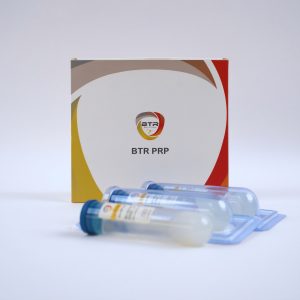
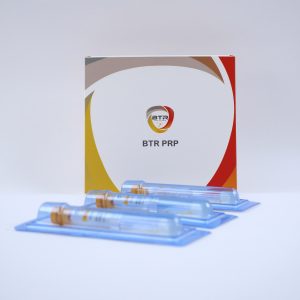
If you run an orthopedic or pain management practice and you’re thinking about adding PRP, the kit itself is the small box that does most of the heavy lifting. It’s a single-use, FDA-cleared Class II device that lets you draw a patient’s blood, spin it down, and inject the platelet-rich plasma in one closed sterile workflow, and the kit you pick quietly sets your platelet concentration, your leukocyte profile, your delivered volume, and your per-procedure margin.

Clearance: FDA Class II 510(k)
Per-Kit Wholesale: ~$150-$600
Patient Pay: ~$500-$1,500
Procedure Time: 30-60 min
Service Model: Cash-pay
Key Takeaway

A PRP kit is an FDA-cleared Class II single-use device that prepares autologous platelet-rich plasma at the point of care, with wholesale kit costs typically running between roughly $150 and $600 and patient-pay prices commonly between $500 and $1,500 per injection.

What is included in a PRP kit and what role does each component play?

You’re not buying a tube. You’re buying a sterile system where each part is engineered to keep the workflow closed from vein to injection, and every piece carries clinical weight. Knowing what’s in the box and why it’s there is how you tell a serious kit from a glorified blood-collection tube.

  • Separation tube: Conical or oval geometry with pre-loaded anticoagulant, plus a separator gel or floating buoy that isolates the platelet layer during spin.
  • Anticoagulant: ACD-A or sodium citrate, chosen to preserve platelet function and keep pH friendly to cell signaling.
  • Optional activator: Calcium chloride or thrombin for bedside growth factor release, or no activator when endogenous tissue activation is the plan.
  • Sterile disposables: Draw needle, transfer couplers, injection needle, and prep supplies so the workflow stays closed and single-use.
Expert Note

Every PRP kit is supplied sterile with a documented expiration date as part of its FDA clearance, and that sterility chain must be respected at the practice level.

Which clinical indications in orthopedic and pain management is PRP used for?

PRP earns its keep in chronic, degenerative, and tendinopathic pain, not acute inflammation. The strongest evidence clusters around a handful of indications, and that’s where you should anchor your service line before chasing the longer tail.

  • Knee osteoarthritis: The largest single use case, with meta-analyses favoring PRP over corticosteroid or hyaluronic acid in mild to moderate disease.
  • Lateral epicondylitis and patellar tendinopathy: Strong evidence, especially when conservative care has failed and surgery is the alternative.
  • Plantar fasciitis: Well-supported and often the patient’s first PRP experience.
  • Spine and SI joint pain: Growing use in pain management for facet and sacroiliac sources, with evidence still maturing.
Expert Insight

Knee osteoarthritis, lateral epicondylitis, and plantar fasciitis have the strongest evidence base for PRP in orthopedic and pain management, with other tendinopathies and axial spine sources still maturing in the literature.

What FDA regulatory classification governs PRP kits and what does that mean for a practice?

Most practices get the kit’s clearance wrong on day one and only find out when a state board or a plaintiff’s attorney asks the awkward question. The good news is the rules are clear once you separate the device from the procedure, and your documentation does most of the protective work.

Tier 1 – Device clearance: PRP kits are Class II devices cleared via 510(k), based on substantial equivalence to a predicate rather than fresh clinical efficacy data.
Labeling is narrow, usually limited to preparing autologous PRP from a small blood sample.
Tier 2 – Off-label clinical use: Most musculoskeletal injection uses fall outside the kit’s labeled indications, which is legal for the physician but not for marketing.
You can perform it; you can’t advertise it beyond what’s on the label.
Tier 3 – Autologous tissue framework: The PRP itself sits under 21 CFR Part 1271 as an HCT/P, with FDA enforcement discretion for minimally manipulated, same-procedure autologous use.
Tier 4 – Practice documentation: Cleared kit on file, centrifuge program logged, lot numbers tracked, informed consent that names the off-label use, and a clinical rationale for each case.
Compliance Note

PRP kits are FDA-cleared as Class II devices through the 510(k) pathway with narrow labeling, which means most orthopedic and pain management clinical uses of the resulting PRP are technically off-label but remain legal under the physician practice of medicine.

What determines the quality of the PRP produced by a kit?

The kit’s marketing sheet will hand you one number; the patient’s outcome depends on five. Once you understand which specs actually move the clinical needle, you can read a vendor spec sheet and a bench comparison study with the same skeptical eye.

Tier 1 – Platelet concentration and capture: Concentration factor (typically 2x to 7x baseline, with 3x to 6x clinically meaningful) paired with capture efficiency, since high concentration in a tiny volume can deliver fewer total platelets than a modest concentration in a useful volume.
Sub-2x preparations are barely distinguishable from plain plasma.
Tier 2 – Leukocyte profile: Leukocyte-rich PRP suits chronic tendinopathies; leukocyte-poor PRP suits intra-articular use, especially knee osteoarthritis.
Tier 3 – Red blood cell contamination: Low RBC is a marker of clean separation; high RBC can drive pro-inflammatory signaling and degrade joint outcomes.
Tier 4 – Volume and spin protocol: Final delivered volume must match the target tissue, and single-spin versus double-spin protocols drive everything above.
Operator technique, time-to-process, and patient hydration add real batch-to-batch variability no kit can fully erase.
Critical Insight

Clinically meaningful PRP typically requires a platelet concentration factor of approximately three-fold to six-fold over baseline, with leukocyte content and residual red blood cell load tuned to the specific clinical indication.

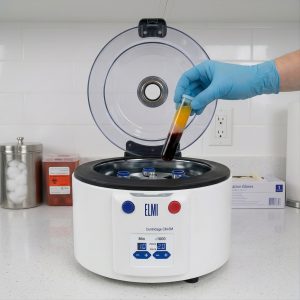
What centrifuge or processing equipment is required to run a PRP kit?

The centrifuge is where most practices either save money for years or create a bottleneck they can’t undo. It’s matched to the kit, not chosen independently, and the cheapest path is usually the one that fits your kit shortlist before you sign anything.

  • Spin specs: Clinical-grade benchtop unit, swinging-bucket rotor, RCF range roughly 800 to 3,500, capacity for at least one kit per cycle.
  • Programmable presets: Vendor-validated programs stored by name to eliminate manual entry errors during routine use.
  • Capital cost: Roughly $2,000 to $7,000, sized to a standard procedure room counter.
  • Maintenance and logs: Periodic RPM and timer calibration, rotor and seal inspection, and documented disinfection in the practice’s equipment file.
Key Fact

Clinical PRP centrifuges typically cost between roughly two thousand and seven thousand dollars and must support the RCF range and rotor geometry validated by the kit manufacturer.

What is the typical cost per procedure when using a PRP kit?

Per-procedure cost is where most practices either build a real margin or quietly lose money on labor they never priced. The kit price is the headline; the fully-loaded cost is the number you should actually run your pro forma on.

Cost LeverPRPCorticosteroidHyaluronic Acid
Kit or drug~$150-$600Under $50~$100-$400
Amortized capitalA few dollars per caseNegligibleNegligible
Clinical time (30-60 min)HigherLowerModerate
Fully loaded total~$250-$800Under $50Comparable to PRP
Financial Verdict

Fully-loaded per-procedure cost for PRP in most orthopedic and pain management practices lands between roughly two hundred fifty and eight hundred dollars once the kit, supplies, allocated labor, and overhead are honestly counted.

What revenue and ROI should a practice expect from adding PRP services?

PRP is cash-pay because Medicare and most commercial carriers still call it investigational, so your revenue model lives or dies on patient education, pricing discipline, and case volume. Treat it like a real service line, not a feature on your website, and the payback math gets friendly fast.

New service line (months 0-6): Expect 2 to 10 cases a month while referrers and patients learn the option exists; focus on patient education content and front-desk scripting.
Established program (post-12 months): Plan for 20 to 50 cases a month once PRP is integrated into a broader regenerative offering with consistent internal and external promotion.
Bundled care pathway: Pair PRP with physical therapy, bracing, or structured follow-up imaging when patients need a clear value framework for cash-pay pricing.
Series-based pricing: Quote two to three injections over weeks at a slight per-injection discount to mirror the literature and ease affordability.
The Cost Reality

Per-procedure margin commonly runs between two hundred and twelve hundred dollars and payback on initial equipment, training, and marketing investment is typically achieved within three to twelve months for practices that hit reasonable volume.

What are the risks, contraindications, and complications associated with PRP procedures?

PRP is one of the safer injection procedures in the regenerative toolbox because the active agent is the patient’s own blood, but safer is not safe by default. Screening, sterile workflow, and honest consent are what keep the complication curve flat.

Tier 1 – Absolute contraindications: Active infection at or near the site, severe thrombocytopenia or critical platelet dysfunction, hemodynamically significant anemia, and active local malignancy.
Growth factor exposure to a tumor bed is the line you don’t cross.
Tier 2 – Relative contraindications: Systemic anticoagulation, recent local corticosteroid, poorly controlled diabetes, active autoimmune flare, and pregnancy with thin evidence.
Tier 3 – Expected post-procedure events: Transient injection-site pain, stiffness, bruising, and swelling lasting 1 to 7 days; cover these in consent so they’re not mistaken for adverse events.
Tier 4 – Serious but rare: Infection below 1% in well-conducted series, vasovagal reactions during the draw, transient joint pain flare, and very rare nerve irritation.
Safety Note

Infection is the most feared local complication of PRP and remains rare with proper sterile technique and a closed-kit workflow, with reported rates below one percent in well-conducted series.

What training and clinical protocols should staff follow before performing PRP?

The kit doesn’t make the program; the team and the protocol do. Layered training across phlebotomy, centrifuge operation, and ultrasound-guided injection is the difference between a service that’s reliable from day one and one that’s still finding its feet a year in.

  1. Phlebotomy training: Confirm staff can secure clean venous access, handle vasovagal reactions, and hold a sterile field; cross-train MAs or nurses with prior experience first.
  2. Centrifuge certification: Vendor-led training at install on loading, balancing, program selection, error recognition, and basic troubleshooting; restrict use to a small named group.
  3. Image-guided injection training: Push the injecting clinician toward ultrasound guidance for intra-articular and tendinous targets, where blind landmark technique has documented accuracy gaps.
  4. Written clinical protocol: Document indication-specific selection, NSAID and steroid washouts, draw and processing steps, activation choice, injection technique, and post-procedure rehab cadence.
  5. Informed consent and prep: Name the off-label use, the cash-pay responsibility, realistic time-to-effect, risks, contraindications, and alternatives; confirm NSAID hold and hydration before each procedure.
  6. Outcome tracking: Capture validated pain and function scales at baseline and follow-up so you can refine selection and prove value over time.
Regulatory Reality

A complete PRP program needs documented training across phlebotomy, centrifuge operation, and ideally ultrasound-guided injection, plus a written clinical protocol and an informed consent that explicitly covers the off-label nature of the procedure.

How do PRP kits from different manufacturers compare on quality, ease of use, and price?

Kit comparison is where most buying decisions go sideways, because the dimensions that matter clinically aren’t always the ones the sales rep leads with. Pick on output specs and total cost of ownership, not headline kit price, and the field narrows quickly.

DimensionWhat to DemandCommon Red Flag
Cellular outputIndependent bench data on platelet concentration, capture, leukocyte profile, RBC, and final volumeConcentration cited in a sub-volume, not the whole product
Workflow ergonomicsTotal minutes, transfer steps, single-spin vs double-spin, operator forgiveness“Easy” claims with no time study to back them up
Centrifuge compatibilityValidated on multiple centrifuges, with the option to keep your existing unitProprietary centrifuge that locks you to one vendor for life
Pricing and clearanceTransparent volume tiers and a real 510(k) clearance letterOpaque pricing that depends on what you’ll pay
Training and supportClinical training, marketing materials, warranty, and responsive serviceClinical claims that exceed the cleared labeling
Decision Point

Define your practice’s primary indications first to set leukocyte-rich versus leukocyte-poor and required volume, then narrow to kits whose independently characterized output specifications match that need, and only then negotiate on price and support.

Will Lawson

Written by Will Lawson
Medical Affairs Manager
Will Lawson is the Medical Affairs Manager at BTR PRP, a U.S.-based provider of FDA-cleared Class II PRP kits for medical and aesthetic practices. He focuses on helping clinics lower cost-per-procedure through smarter product selection, clear patient education, and alignment with current best practices and regulatory standards in PRP therapy.