PRP Kit Pitfalls That Quietly Damage Patient Results
What common pitfalls and quality risks should be avoided when selecting and using a PRP kit?
The pitfalls that hurt you in PRP rarely show up at the purchase order. They surface weeks later, when a tendinopathy patient flares or a knee cohort underperforms, and you can’t isolate which variable broke. Clinicians who avoid that trap treat kit selection as a system decision, kit plus protocol plus operator training plus indication-specific evidence, not a single product purchase.
Marketing-driven selection: Headline concentration multiples (5x to 9x) ignore capture efficiency, leukocyte profile, and red cell contamination.
Protocol drift: Shaving spin time or swapping centrifuge models invalidates the manufacturer’s data and your liability defense.
Indication mismatch: Using one leukocyte profile for every indication leaves roughly half your patients on the wrong preparation.
Hidden economics: Proprietary consumables and lock-in pricing push true cost per treatment to two or three times the kit’s headline price.
Expert Summary
PRP kit selection is a system decision combining kit, validated protocol, trained operator, and indication-specific evidence, not a single product purchase.
Why does choosing a kit based solely on marketing claims of platelet concentration lead to clinical disappointment?
The headline concentration number is the least useful and most easily inflated of the metrics that actually drive PRP outcomes. You’re being sold the easiest variable to flatter under ideal lab conditions, while capture efficiency, leukocyte profile, and patient baseline platelet count quietly decide what your injection actually does in tissue.
Metric
Marketing Claim
Real-World Reality
Concentration multiple
“Up to 9x”
3x to 4x with average donors and draws
Platelet capture efficiency
Rarely disclosed
Often 40-60%, sometimes lower
Dose-response ceiling
“More is better”
Soft threshold around 1 billion platelets/mL
Absolute dose delivered
Implied identical
Varies 2x or more on patient baseline alone
The Real Risk
Above roughly one billion platelets per milliliter, higher concentration without the correct leukocyte profile can drive inflammation rather than improve outcomes.
What happens to PRP quality when a kit’s required spin protocol is shortened, lengthened, or adjusted on the fly?
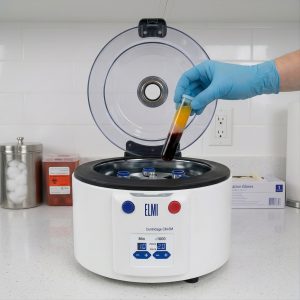
PRP separation is a physics problem before it’s a biology problem, and small deviations from the validated spin produce nonlinear changes in the final product. Each kit’s IFU specifies a g-force, duration, and ramp profile validated against a specific centrifuge, and once you drift from any of those three, you’ve left the data behind.
You shorten the spin: A substantial fraction of platelets stay distributed in the plasma column above the buffy coat, dropping recovery 20 to 40 percent with no visible warning in the tube.
You lengthen or run higher g-force: Platelets pack too tightly against the red cell layer, red cell contamination rises during extraction, and mechanical activation in the centrifuge releases growth factors into discarded plasma.
You swap centrifuge models: Even with identical RPM and time, rotor radius differences deliver 15 to 30 percent more or less g-force than the validated unit, the same kit produces a different product.
Hard-Learned Lesson
Any liability defense premised on “we used kit X” collapses when the IFU adherence record shows spin deviations, because the product injected was no longer the product the manufacturer validated.
How do mismatches between the kit’s leukocyte profile and the clinical indication harm outcomes?
Leukocyte composition is the single most underappreciated variable in PRP outcomes, and a mismatch reliably damages results. The major PRP societies now publish indication-specific guidance precisely because using the wrong profile creates predictable failure, sometimes loud, sometimes silent.
Most clinics own one PRP kit and use it for every indication, which means roughly half their patient population is receiving the wrong leukocyte profile for their condition.
What contamination and sterility failures occur when open-system or partially-open kits are used outside their validated workflow?
Sterility risk lives in the moments the blood product touches room air or moves between containers, and open-system kits multiply those moments. A closed-system kit moves blood from draw to centrifuge to injection syringe without ever opening the tube; an open kit asks the operator to uncap, pipette the buffy coat, and recap in a room that doesn’t meet pharmacy-compounding air standards.
Dwell-time risk: A product sitting thirty minutes between preparation and injection is meaningfully riskier than one injected within five.
Documented baseline: Reported PRP-injection infection rates run well under one percent, but cluster around open-system workflows in non-sterile rooms.
Regulatory gray zone: State medical boards and CMS increasingly expect documented preparation-environment controls matched to your workflow’s openness.
Safety Note
Clinics running open-system kits in standard exam rooms without addressing airflow, surface sanitation, and technique standardization cannot document their sterility controls if challenged.
Which kits lack peer-reviewed clinical evidence, and why does that absence matter for liability and patient outcomes?
A defensible PRP kit needs more than a 510(k) and a manufacturer bench report, it needs independent peer-reviewed outcome data for the specific indication you’re treating. Bench numbers describe the product; they don’t predict what happens in your patient’s joint, and the consent conversation gets meaningfully harder when you can’t cite a trial that matches what you’re about to do.
Tier 1. Strong independent evidence:Kits with multiple independent RCTs in the indication being treated.
Concentrated in knee osteoarthritis, lateral epicondylitis, and hair restoration
Tier 2. Mixed or manufacturer-funded evidence:Published clinical studies exist but funding sources are sponsor-linked or trials are underpowered.
Requires careful reading of conflicts and methodology
Tier 3. Characterization data only:Bench studies show defined platelet count and leukocyte profile but no independent clinical outcomes.
Bench performance does not predict in vivo effect
Tier 4. No relevant clinical data:Cleared device with no peer-reviewed studies in the planned indication.
“I used what was available” is a weaker malpractice defense than “I used what has Level I evidence”
Non-Negotiable
Require a literature review for any kit under consideration, distinguish manufacturer-funded studies from independent ones, and accept that some kits will fail that test.
How do off-label or unvalidated activation methods (calcium chloride dosing, thrombin sources, mechanical activation) compromise the final PRP product?
Activation decides when and how completely the platelet growth factor payload is released, and an unvalidated activation step can drop a kit’s clinical effect to zero without any visible warning. The dose-timing window is narrow enough that improvising here is one of the most reliable ways to inject an inert product.
You use calcium chloride: Too little leaves the payload bound inside intact platelets at injection; too much or too early activates in the syringe, where growth factors degrade or bind to plastic before they reach tissue.
You use bovine thrombin: Fast and reliable, but carries residual immunogenicity risk in patients with prior exposure.
You use autologous thrombin: Safer immunologically but adds a separate preparation step and workflow complexity.
You skip exogenous activation: Works for intra-articular injections where native collagen and tissue thrombin activate in situ, less reliable for soft-tissue applications with limited substrate contact.
Authority Warning
Activation deserves the same protocol discipline as the spin step, with validated reagents and exact dosing rather than eyeballed measurements or mechanical agitation.
What practical operator errors during draw, transfer, and centrifugation degrade an otherwise validated kit’s output?
A validated kit run by an inconsistent operator produces inconsistent output, and the practice usually blames the kit when the problem lives in the workflow. Operator-to-operator variability inside a single clinic is often larger than kit-to-kit variability across products, which is why disciplined preparation is the biggest-payoff investment most PRP practices ignore.
The draw: A slow, struggling venipuncture with a small-gauge needle pre-activates platelets through shear stress before they reach the tube.
Anticoagulant ratio: Most kits specify a 1:9 or 1:10 sodium citrate ratio, underfilling over-chelates calcium and impairs activation; overfilling allows micro-clotting.
Tube handling: Vigorous shaking, dropped tubes, or sudden temperature swings (warm room to cold centrifuge bay) all stress platelets before separation begins.
Buffy coat pipetting: The platelet-rich band is one to two millimeters thick; aspirating too high leaves platelets behind, too low pulls in red cells and leukocytes.
Operator consistency: Pipetting variability alone can shift platelet recovery 30 to 50 percent and change the leukocyte profile substantially.
Critical Warning
Limit PRP preparation to one or two designated operators per clinic with documented training and periodic competency verification rather than distributing the workflow across the medical assistant pool.
How do hidden recurring costs, proprietary consumables, and lock-in pricing distort the apparent economics of a kit choice?
The kit sticker price is the smallest number in the PRP economic decision, and clinics that anchor on it routinely find true cost per treatment runs double or triple what they planned. Once you sign on, the switching cost compounds quietly through staff retraining, inventory write-offs, and consent-form changes that lock you into purchasing schedules that may not match patient demand.
Headline cost layer:$200 to $400 per kit.
The number on the contract and the marketing sheet
Bundled in some product lines, sold separately at meaningful margins in others
Operational layer:Staff preparation time, room turnover, biohazard disposal.
Routinely uncounted in per-kit pricing
Fully loaded cost per treatment:$400 to $800 typical, exceeding $1,000 for premium systems.
The number that determines whether the service is actually profitable at your billing rate
The Cost Reality
A three-year total cost of ownership analysis covering kits, consumables, training, and realistic switching cost routinely reverses the apparent ranking of kits that looked competitive on per-unit price.
What FDA classification and 510(k) clearance issues silently disqualify some kits from acceptable clinical use?
The FDA regulates PRP preparation devices as Class II requiring 510(k) clearance, and the exact language of that clearance matters more than most clinicians who treat “FDA cleared” as a binary realize. Most cleared kits are cleared for one specific use, and the difference between that cleared use and what you’re actually doing creates the liability landscape you operate in.
Standard clearance language: Most kits are cleared to prepare PRP for mixing with bone graft material in orthopedic surgery, not for direct therapeutic injection.
Off-label injection use: Direct injection into joints, tendons, or skin is legal under the practice-of-medicine doctrine but carries a different liability profile than on-label use.
Premium clearances: A smaller number of kits hold clearances closely matching common aesthetic and orthopedic uses, and those clearances justify their premium pricing in defensibility.
Disqualifying labels: Research-use-only labeling, CE marks without US standing, or imported channels bypassing FDA review are regulatory exposure most clinicians don’t see until enforcement arrives.
The Legal Line
Pull the 510(k) summary from the FDA’s public database, read the indication-for-use language verbatim, and remove from consideration any kit whose cleared use cannot survive comparison to your planned clinical application.
Written by Will Lawson
Medical Affairs Manager
Will Lawson is the Medical Affairs Manager at BTR PRP, a U.S.-based provider of FDA-cleared Class II PRP kits for medical and aesthetic practices. He focuses on helping clinics lower cost-per-procedure through smarter product selection, clear patient education, and alignment with current best practices and regulatory standards in PRP therapy.