How to Choose a PRP Kit for Your Practice
Choosing a PRP kit isn’t a generic medical-supply decision, it’s a clinical procurement call where biology, regulation, workflow, and economics all collide. The right kit for an orthopedic sports-medicine practice is the wrong kit for an aesthetic dermatology clinic, and the cost of picking poorly shows up in disappointing outcomes long after the disposable invoice is paid. Start from the indication you’ll actually treat, and let leukocyte profile, concentration target, and evidence drive the shortlist before price ever enters the conversation.
- Indication first: Match the kit’s leukocyte and concentration profile to the specific condition you treat, not to a generic “PRP” label.
- Leukocyte profile: LR-PRP for chronic tendinopathy, LP-PRP for osteoarthritis, aesthetics, and hair restoration.
- Total cost envelope: Disposables run $30 to over $300 per case, centrifuges from under $2,000 to over $15,000, patient fees $250 to $2,000 cash-pay.
- Workflow reality: Plan for 30 to 45 minutes chair time per case from draw through injection, plus real training and ongoing technique discipline.
Key TakeawayA disciplined PRP kit selection starts from the clinical indication, narrows by leukocyte profile and platelet concentration target, validates evidence and 510(k) framing, then layers in cost, workflow fit, and the long-term value of training and manufacturer support.
Indication is the gravitational center of kit selection because the biology you’re trying to influence shifts dramatically from one application to the next. A kit that’s perfect for chronic tendinopathy can underperform badly in an arthritic knee, and the practices that get the best outcomes are the ones that pick the kit for the case mix, not the case mix for the kit.
You treat orthopedic tendinopathy or sports-medicine soft tissue: Pick a higher-concentration, leukocyte-rich (LR-PRP) kit, since the evidence in lateral epicondylitis, plantar fasciitis, and patellar tendinosis favors a controlled inflammatory boost.
You inject knee or hip osteoarthritis: Go with leukocyte-poor (LP-PRP) preparations, because meta-analyses consistently show lower WBC counts reduce catabolic signaling inside the joint.
You run aesthetic, dermatology, or hair-restoration: Stick with LP-PRP delivered in lower volumes, where consistency of low-WBC plasma matters more than peak platelet count.
You run a multi-specialty or dental/wound-care practice: Look for a kit family that can flex volume and leukocyte profile by protocol, accepting a higher per-disposable cost for the workflow range.
The BackdropTendinopathy and sports medicine favor LR-PRP, while osteoarthritis, aesthetics, hair restoration, and dermatology favor LP-PRP, and one kit rarely serves both worlds well.
Leukocyte content is the single biggest biological variable separating one PRP preparation from another, and it’s the line the modern literature has organized itself around. The white cells in LR-PRP release matrix-degrading enzymes and inflammatory cytokines on activation, which helps stalled tendons heal but punishes inflamed joints and aesthetic skin.
| Criteria | LR-PRP (Leukocyte-Rich) | LP-PRP (Leukocyte-Poor) |
|---|
| Best evidence indication | Chronic tendinopathy, lateral epicondylitis, Achilles, patellar tendon | Knee/hip OA, facial aesthetics, hair restoration, dermatology |
| Inflammatory profile | High: MMP-9, IL-1, IL-6, TNF-alpha, ROS released on activation | Low: minimizes catabolic signaling and post-treatment bruising |
| Typical kit type | Single-spin separator-gel or buffy-coat preserved | Double-spin with WBC band discarded, or buoyancy-float systems |
| Trade-off | More volume, easier to produce, useful inflammation | Cleaner product, lower yield volume, harder to prepare consistently |
Decision PointCompare kits on documented platelet concentration factor, absolute WBC concentration, and red blood cell contamination rather than brand identity, since those three values determine clinical behavior more than the marketing does.
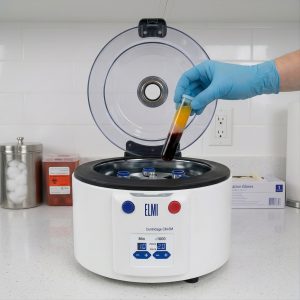
Centrifugation methodology is what a kit can actually deliver, and the two variables that decide everything are the number of spin cycles and the separation mechanism that isolates platelets from the rest of the blood. Speed and operator-friendliness sit on one end of that spectrum, peak concentration and tighter control sit on the other, and almost no kit gives you both.
Tier 1 – Single-Spin Separator-Gel Systems: One soft spin at roughly 100 to 1,500 g for 3 to 10 minutes, with a thixotropic gel forming a physical barrier between red cells and the platelet layer.
Fast (8 to 12 minutes start to finish), reproducible, and runs in standard lab centrifuges under $2,000, but caps platelet concentration at 1.5 to 3x baseline.
Tier 2 – Double-Spin Buffy-Coat Systems: A first soft spin separates plasma from RBCs, then a hard spin at 1,500 to 3,500 g for 10 to 15 minutes pellets the platelets for resuspension.
Routinely hits 4 to 9x baseline concentration, but takes longer, demands more technique, and often needs a manufacturer-specific centrifuge costing $5,000 to $15,000+.
Tier 3 – Closed-System Advanced Platforms: Selective draw points, buoyancy floats, or proprietary chambers that physically isolate the platelet band from the WBC layer.
Best contamination control and reproducibility, but premium per-disposable cost and a locked-in centrifuge purchase.
Expert NoteIndependent studies show two- to threefold variation in measured platelet concentration between operators using the same kit, which is why standardized draw and spin technique often matters more than the kit class you pick within a given product category.
Anticoagulant and activation choices look like small details on a spec sheet, but they shape both the harvest and how the platelets behave when they hit the tissue. The modern field has converged on a few defaults for good biological reasons, and you should know why before letting a sales rep tell you their proprietary twist is better.
- ACD-A is the standard anticoagulant: Chelates calcium gently, preserves platelet morphology and growth-factor responsiveness, and prevents premature activation in the tube.
- Heparin is avoided: Activates platelets prematurely and interferes with downstream coagulation at the injection site.
- Non-activated injection dominates in vivo use: Endogenous collagen and tissue thromboplastin trigger physiologic activation in joints, tendons, and dermis, which is the orthopedic and aesthetic default.
- Calcium chloride or autologous thrombin activation: Reserved for ex vivo applications like wound dressings, fibrin glues, and dental graft preparations where you need an immediate growth-factor burst.
Expert InsightHead-to-head clinical evidence on activated versus non-activated PRP is mixed across most indications, which means activation choice is less consequential than the upstream decisions on platelet concentration and leukocyte profile.
The gap between what a 510(k) actually clears and what a PRP kit gets used for in the real world is wider than most clinicians realize, and that gap is your regulatory and medico-legal exposure. The FDA cleared the device to prepare PRP, not to treat anything specific, and conflating those two in your marketing or consent forms is where practices get into trouble.
- Read the actual 510(k) summary, not the brochure: The cleared indication is almost always preparation of autologous platelet concentrate for mixing with bone graft material during orthopedic, dental, or maxillofacial surgery.
- Recognize most therapeutic uses are off-label: Tendinopathy, OA, hair restoration, facial rejuvenation, and sexual-health applications all sit outside cleared language, which is legal under physician judgment but shifts the burden onto you.
- Confirm HCT/P minimal-manipulation status: Standard centrifugation and autologous reinjection keep PRP out of biologic-licensure territory, but proprietary stimulators or growth-factor adjuvants can push it across the line.
- Document off-label use in informed consent: Spell out that FDA clearance addresses device safety for PRP preparation, not therapeutic efficacy for any specific condition.
- Avoid manufacturer marketing language that overstates claims: Repeating an “FDA cleared” claim in patient-facing materials in a way that implies therapeutic approval is exactly the framing that has drawn enforcement attention.
Compliance NoteFDA 510(k) clearance establishes only that a PRP kit prepares platelet concentrate safely, not that PRP works for any specific therapeutic condition, and clinics that conflate the two in marketing have drawn enforcement action.
The economics span a far wider range than most outsiders assume, and the gap between best-case pro formas and real-world margins is where most adoption mistakes happen. Case volume drives break-even far more than disposable price does, but only if your indication, fee structure, and workflow are honest about what the local market will actually pay.
Disposable kit: $30 to $300+ per case
Centrifuge capital: $1,500 to $15,000+
Patient fee per session: $250 to $2,000 cash-pay
Chair time per case: 30 to 45 min
Break-even (mid-priced kit, $750 fee): roughly 10 to 20 cases
Financial VerdictPRP is rarely reimbursed by commercial payers despite available CPT codes like 0232T and 86999, so almost all PRP revenue is cash-pay or bundled into aesthetic packages, which means case volume drives break-even far more than disposable price does.
Evaluating evidence and support is the discipline most buyers skip, and it’s responsible for a huge share of regretted kit purchases. There are two separate evidence questions you need to ask, and conflating them is the single most common evaluation mistake.
- Separate therapy evidence from kit evidence: Trials proving “PRP works for X” don’t prove “this specific kit works for X,” because preparation characteristics vary so widely between systems.
- Pull therapy-level evidence from PubMed: Look for RCTs and meta-analyses, weighted by sample size, blinding quality, and outcome measure validity, and apply tighter scrutiny to manufacturer-funded work.
- Demand kit-level characterization data: Independent third-party measurements of platelet concentration factor, leukocyte content, RBC contamination, and operator-to-operator yield consistency, ideally published rather than handed to you on a glossy sheet.
- Audit training and support depth: In-person training with hands-on technique and ongoing case review is a different product than a one-hour rep visit, and the difference shows up in your outcomes for years.
- Test responsiveness before you buy: Sales-rep response time, disposable replacement lead times, and clinical-hotline availability matter for daily operations far more than the polished initial demo suggests.
Critical InsightPractices that ask manufacturers for raw concentration data from independent labs, recent peer-reviewed publications specific to the exact platform, and a referenceable customer list in similar specialties consistently end up with kits that perform closer to their marketed claims.
The operational footprint of a PRP program is almost always underestimated during evaluation, and workflow fit can quietly sink a kit regardless of how well its biology performs. Map the actual case path through your practice before you sign anything, because the manufacturer’s idealized timeline rarely survives contact with a real clinic day.
Tier 1 – Equipment Footprint: Centrifuge compatibility is the first constraint, since some kits demand a proprietary machine with locked speed presets and others run in any standard fixed-angle or swing-bucket centrifuge that meets the RCF spec.
Confirm your existing centrifuge meets the manufacturer’s RCF, capacity, and balance specs before assuming compatibility.
Tier 2 – Staff Skill Requirements: Clean atraumatic phlebotomy of 15 to 60 mL is essential, since hemolysis from a rough draw contaminates the final product and ruins yields.
Practices without in-house phlebotomy benefit from sending an MA to a short training course or hiring with phlebotomy experience.
Tier 3 – Per-Case Workflow: Plan 30 to 45 minutes chair time from draw to injection, broken into roughly 5 minutes for draw, 8 to 15 for centrifugation, 5 to 10 for transfer and prep, and the remainder for site prep, anesthesia, and injection.
Aseptic technique is non-negotiable since you’re reinjecting into the patient, and closed-system kits cut transfer steps to reduce contamination risk.
Tier 4 – Sustained Operator Competency: Manufacturer training ranges from a one-hour rep visit to a multi-day certified course, with the better programs covering indication-specific injection technique and outcome tracking.
Operators doing fewer than two cases per week drift in technique without periodic refresher training or peer review.
Pro TipPractices that map their actual workflow before adopting a kit, rather than trusting the manufacturer’s idealized timeline, consistently find adoption smoother and per-case time more predictable.
The pitfalls cluster into a small set of recurring patterns that experienced practitioners learn to recognize, and almost every disappointed PRP buyer has fallen into one of them. The good news is they’re all preventable if you know what to look for before signing the purchase order.
You’re tempted to pick on disposable price alone: Stop and check the leukocyte profile and concentration factor against your indication first, because a $30 kit that delivers the wrong biology costs you patients, not just dollars.
You’re running PRP across multiple specialties with one kit: Verify that single kit can actually flex leukocyte profile and volume by protocol, or accept that one specialty’s outcomes will quietly suffer.
Your outcomes are drifting or inconsistent across patients: Build documented SOPs for draw vacuum, tube inversion, time-to-spin, and aspiration depth, then verify yield with periodic platelet counts on a hematology analyzer.
You’re seeing efficacy claims for conditions with no published controlled trials: Treat that as a marketing red flag, especially when it’s paired with comparative claims against unnamed “other kits” or testimonials substituting for outcome data.
Safety NoteTracking patient-reported outcomes at baseline, six weeks, three months, and six months for each indication is the most underused defense against technique drift and inflated marketing claims, and it’s the only honest way to know whether your kit and your protocol are actually working.